
A silent micro-trend is quietly shifting the foundations of institutional risk management. While retail operations focus heavily on cloud-managed software and remote entry logs, the world’s highest-security facilities—sovereign vaults, elite wealth managers, and central banks—are moving decisively in the opposite direction. They are decoupling their core asset protection layers from the power grid entirely. When safeguarding irreplaceable physical property, the ultimate defense is an absolute lack of connectivity.
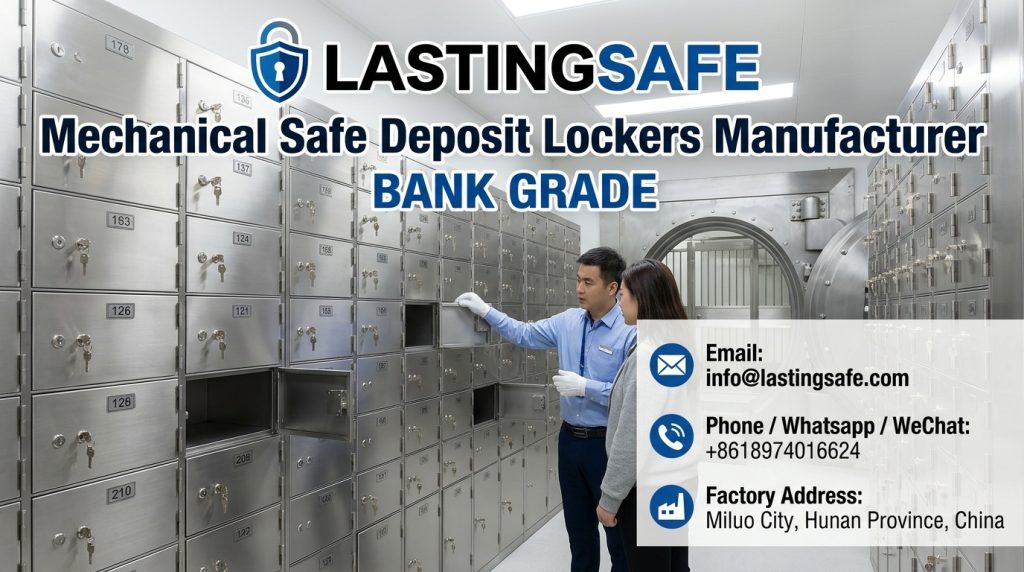
This strategic pivot highlights why premium treasury developers avoid commercial grade alternatives, choosing instead to collaborate with a specialized mechanical safe deposit lockers manufacturer capable of meeting strict bank-grade classifications. Without these certified analog barriers, sensitive physical property faces extreme vulnerability during unprecedented network blackouts or infrastructural collapses.
Engineering the Vault Interior: The Mechanics of True Bank-Grade Protection
Standard commercial storage options are completely unsuited for institutional environments; they lack the metallurgical composition required to defeat advanced breaching methods. True bank-grade engineering requires an entirely different approach to raw materials, focusing heavily on specialized alloy compositions and micro-tolerance machining. Heavy-duty vault structures are purposely built from thick, cold-rolled steel panels meticulously designed to absorb extreme kinetic impacts and withstand focused thermal attacks.
Beyond raw metallurgy, optimizing space within an institutional treasury requires profound architectural adaptability. Traditional, rigid storage frameworks frequently lead to wasted overhead space or awkward room utilization. To solve this design challenge, modern vault manufacturing utilizes advanced modular structural layouts. These highly scalable systems provide:
- Vertical Optimization: Maximizing vertical room heights through balanced weight-distribution frames.
- Dynamic Scalability: Expanding horizontal configurations incrementally as customer demand grows over time.
- Elimination of Intermediary Flaws: Sourcing custom modules directly from factory floors guarantees uniform quality control, ensuring that structural defects common to fragmented supply chains are systematically eliminated.
The Dual-Key Custody Protocol: Zero-Trust by Design
Electronic entry locks provide convenient everyday access, but they also bring systemic operational vulnerabilities, including administrative password exposure and complete physical freeze-ups during extended power outtages. Heavy-duty dual-key mechanical configurations eliminate these vulnerabilities. Operating under strict dual-custody principles, these traditional locking cylinders demand two entirely different physical keys to turn in unison before the primary internal deadbolts can slide back.
The operational workflow establishes a strict split-responsibility structure:
| Key Assignment | Custodian | Operational Role |
| Master Guard Key | Institution Vault Officer | Validates institutional authorization and initializes the locking cylinder. |
| Unique Renter Key | Account Holder / Client | Maintained in absolute privacy; provides final clearance to open. |
This mechanical dependency guarantees that neither the organization nor the individual client can open the door alone. Internal employee theft risks are minimized, and because the system contains zero digital logic boards, it remains permanently immune to remote hacking, data collection, and electromagnetic interference.
Procurement Economics: Maximizing Vault ROI
For independent vault firms, regional credit unions, and growing wealth managers, installing high-security vault equipment represents an intense, long-term capital allocation. Achieving maximum financial return means identifying certified safe deposit boxes for sale directly from primary manufacturing facilities. Bypassing third-party distributors and broker channels allows operations to acquire tailored security layouts built specifically for their structural architectural prints while preserving vital investment margins.
Furthermore, these offline units demand next to zero ongoing maintenance costs. Free from delicate digital components, biometric updates, or complex wiring grids, premium mechanical lockers perform reliably for decades. This long-term structural durability yields an exceptionally efficient total cost of ownership, turning raw capital expenditure into a highly reliable, permanent revenue-generating institutional asset.
Future-Proofing Asset Security
As environmental threats become increasingly unpredictable and cyber vulnerabilities grow more systemic, the undeniable value of robust physical protection remains absolute. Offering clients verified, analog safety systems enables institutions to build unparalleled market trust and project a standard of permanent stability.
LastingSafe remains an industry pioneer in specialized vault manufacturing, delivering certified bank-grade mechanical safe deposit lockers directly to prestigious private vaults and banking environments globally. Built with heavy-duty dual-key mechanisms, precise anti-pry tolerances, and adaptable modular footprints, our premium locker configurations deliver the ultimate defense against unauthorized entry. Secure your vault project with factory-direct reliability. Reach out to the specialist engineering team at LastingSafe today to review your custom floor plan requirements and secure a professional commercial quote.
