
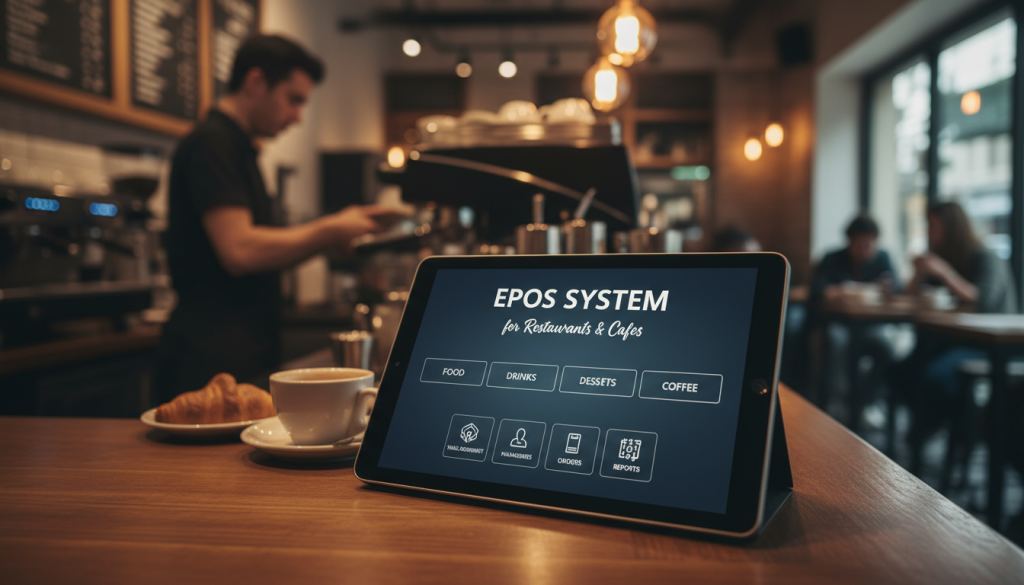
The hospitality industry is famously thin on margins and high on pressure. For independent cafe owners and restaurant managers, the difference between a profitable month and a break-even one often comes down to operational efficiency. In an era where customer expectations are higher than ever, the traditional cash register has become a liability. To stay competitive, savvy operators are migrating toward integrated technology, specifically tailored EPOS for restaurants & cafes.
But what does “efficiency” actually look like in 2024? It isn’t just about faster transactions; it’s about creating a frictionless ecosystem where the kitchen, the floor staff, and the management software speak the same language.
The Shift from Transactional to Transformational
Modern Point of Sale systems have evolved far beyond the “point of sale.” They are now the central nervous system of a business. When exploring solutions like those offered at CubePOS, it becomes clear that the hardware is only one half of the equation. The real magic happens in the software’s ability to handle the “organized chaos” of a busy lunch rush.
1. Eliminating Communication Gaps
The most common point of failure in a restaurant is the “handoff”—the moment an order moves from the server’s notepad to the chef’s line. A professional EPOS system digitizes this instantly. Orders are sent to kitchen printers or display screens with precise modifiers (e.g., “no gluten,” “extra spice”), reducing costly remakes and keeping the kitchen staff focused on quality rather than deciphering handwriting.
2. Inventory Intelligence
Food waste is the “silent killer” of restaurant profits. Without a digital log, tracking every gram of coffee or every slice of cake is nearly impossible. Modern systems track inventory in real-time, alerting managers when stock levels are low. This allows for just-in-time ordering, ensuring that your capital isn’t tied up in excess stock that might spoil.
3. The Power of Customer Data
In the past, only giant chains had access to “Big Data.” Today, a small cafe can use its EPOS to identify its most loyal customers, its most profitable menu items, and its slowest hours. This data allows for targeted marketing and smarter staffing schedules, ensuring you aren’t overstaffed during the mid-afternoon lull.
Maintaining the “Human Touch” Through Automation
One of the biggest misconceptions in hospitality is that technology makes service feel “cold.” In reality, the right technology removes the administrative burden from your staff, giving them more time to be human.
When a server doesn’t have to run back and forth to a stationary terminal to input orders or check a price, they spend more time at the table, engaging with guests and upselling specials. This is where EPOS for restaurants & cafes proves its ROI; it automates the mundane so your team can focus on the hospitality.
What to Look for in a Provider
Choosing a system is a long-term commitment. You need a partner that understands the UK hospitality landscape. Factors to prioritize include:
- Reliability: Does the system work offline if the internet drops?
- Scalability: Can the system grow from one food truck to a three-site restaurant group?
- Support: Is there a UK-based team, like the experts at cubepos.co.uk, who can help when things go wrong on a busy Saturday night?
Conclusion
The hospitality landscape is changing, and technology is no longer an “optional extra.” It is the foundation upon which successful brands are built. By investing in a high-quality, dedicated EPOS solution, you aren’t just buying a fancy screen—you are buying peace of mind, better margins, and a superior experience for your customers.
Whether you are running a boutique coffee shop or a high-volume bistro, the goal remains the same: spend less time on the paperwork and more time on the plate.
