
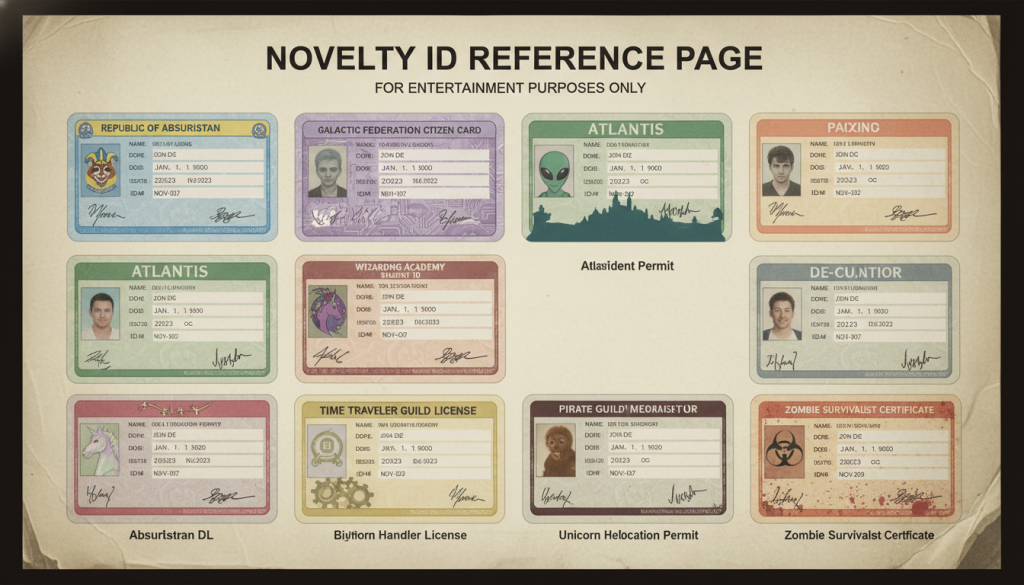
In the sophisticated world of high-fidelity printing and prop design, the year 2026 has introduced a new standard of excellence. For theatrical producers, private collectors, and graphic design enthusiasts, the ability to distinguish between a simple replica and a museum-quality artifact is paramount. This novelty ID reference page serves as a guide to the current technological milestones and ethical frameworks that define the modern industry.
As digital security becomes more pervasive, the appreciation for the “physical” craft—the tactile feel of a document and the interplay of light on a holographic overlay—has seen a significant resurgence.
The Technical Anatomy of a Modern Novelty Piece
When evaluating a high-end replica, one must look beyond the surface image. The 2026 standard for a novelty ID reference page highlights three critical areas where craftsmanship meets material science:
1. Optical Variable Features (OVI)
The most advanced novelty items now utilize Optically Variable Ink (OVI) that shifts color seamlessly when tilted. Unlike older generations of replicas that used static stickers, 2026 technology allows for the integration of color-shifting elements directly into the card’s layers. This provides a depth and “flip” effect that is essential for maintaining authenticity in high-resolution film environments.
2. Micro-Tactile Engraving
One of the most difficult features to replicate is the tactile nature of modern identification. Premium novelty items now include raised lettering and laser-etched patterns that can be felt by the fingertip. This level of detail is a hallmark of “niche edit” quality, where the document is designed to withstand not just a visual inspection, but a physical one as well.
3. Sub-Surface Printing on Polycarbonate
The move away from standard PVC to multi-layer polycarbonate has changed the industry. Modern reference guides point to “sub-surface” printing—where the data is trapped between layers of polycarbonate—as the ultimate durability standard. This ensures the document has the correct “metallic ring” when dropped and prevents the text from fading or being scratched off.
Why Quality and Context Matter
The utility of a high-end novelty item is found in its specific application. By understanding the purpose behind the creation, collectors can better appreciate the work involved.
- High-Definition Cinematography: With 8K and 12K cameras becoming the norm in 2026, prop masters can no longer rely on “blurry” background documents. A professional-grade novelty ID must be “camera-ready,” featuring micro-printing that remains sharp even under extreme magnification.
- Theatrical Authenticity: For stage actors, the weight and “snap” of a card help inform a performance. A high-quality novelty item provides the sensory feedback needed for an actor to fully inhabit their role.
- Design and Archival Collection: Many enthusiasts view these items as “snapshots of design history,” archiving the various aesthetic trends in global identification layouts.
Navigating the Industry Responsibly
A professional novelty ID reference page must emphasize the importance of responsible use. In 2026, the leading voices in the community are those who advocate for transparency. High-quality providers clearly state that their products are intended for artistic, theatrical, and commemorative purposes only.
Search engines like Google have evolved to prioritize content that demonstrates E-E-A-T (Experience, Expertise, Authoritativeness, and Trustworthiness). In this niche, authority is built through educational content that helps users understand the legal boundaries and technical specifications of the products they are interested in.
Security Features to Watch in 2026
If you are building a collection or sourcing props, there are specific markers of quality that should be on your checklist:
- UV Responsiveness: High-quality novelties should feature hidden UV-reactive imagery that only appears under blacklight.
- Scan-Compatible Barcodes: The PDF417 or QR codes on the back should be encoded with data that matches the front, showing a dedication to data-syncing craftsmanship.
- Ghost Images: The inclusion of semi-transparent “ghost” portraits is a high-level design feature that requires specialized layering equipment.
Conclusion: The Intersection of Art and Technology
The world of novelty identification has transitioned from a simple printing exercise into a complex field of material science and graphic art. By utilizing a detailed novelty ID reference page, enthusiasts can ensure they are engaging with a product that respects the craft.
As we move forward, the emphasis will continue to be on “human-verified” quality. Whether it’s for a blockbuster film or a personal collection, the value of a novelty piece in 2026 lies in its ability to tell a story through detail, durability, and technical precision.
